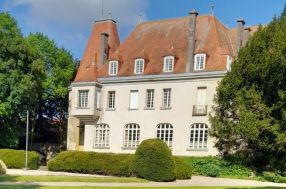
Exterior of the
Etreval Castle

A bit of history: Located in the heart of the Saintois region, the Château d'Etreval is an original monument and a unique witness to the early Lorraine Renaissance. A composite structure, it displays both medieval and Gothic reminiscences with its row of gargoyles and defensive towers resembling a fortified house, and an Italianate architectural vocabulary with its two rows of columns in the round with Tuscan capitals. Erected in 1533 by François de Tavagny, a young Milanese cavalcadeur who entered the service of Duke Antoine of Lorraine after the Battle of Marignano, the Château d'Etreval subsequently passed into the hands of the Gournay, Beauvau-Craon, and Tervenus families, each of whom held prominent positions at the ducal court. Owned by the Martin family since 1841, this estate has been regaining some of its former splendor for the past fifteen years. The restoration project: The castle has already undergone several successive restoration campaigns since 2014, notably the raising and repair of the roofs of the three towers in the northern section. These interventions were accompanied by extensive preventive archaeological studies, which have allowed for a better understanding of the building's origins and a redefinition of its place in the architectural history of Lorraine. Currently, the work focuses on rendering the northwest tower, restoring its cornice, and completely rebuilding the roof of the north curtain wall. The site is open to the public during Heritage Days, and the owners are always happy to provide information to visitors. Awakened from its slumber, the Château d'Etreval is destined to become once again one of those places imbued with the spirit so dear to Maurice Barrès, who set one of the most significant episodes of his book, *La colline inspirée* (The Inspired Hill), there.