The sacred way
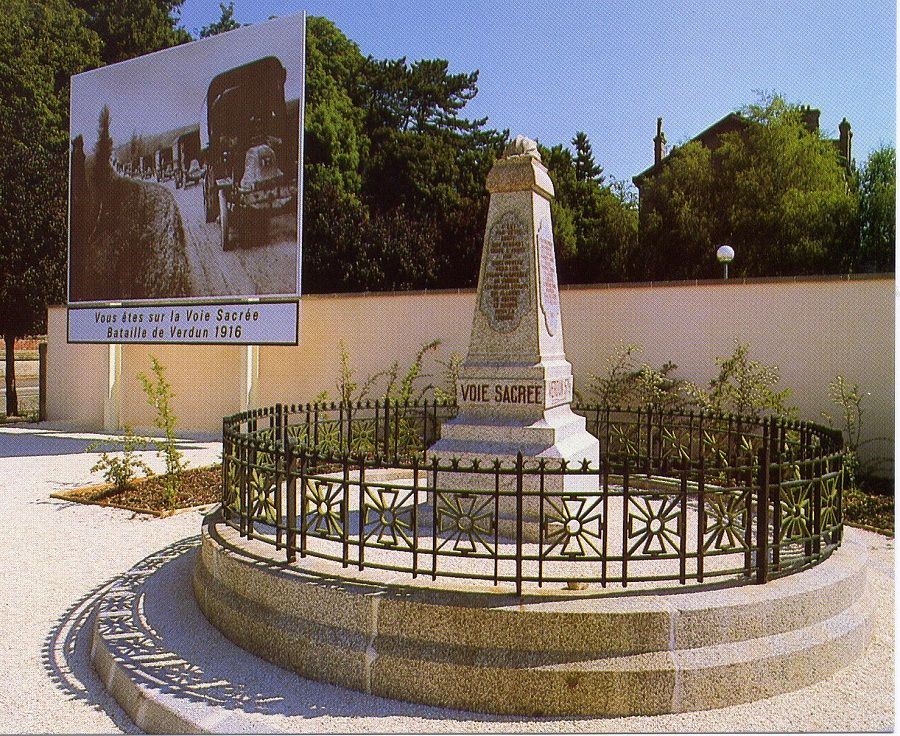
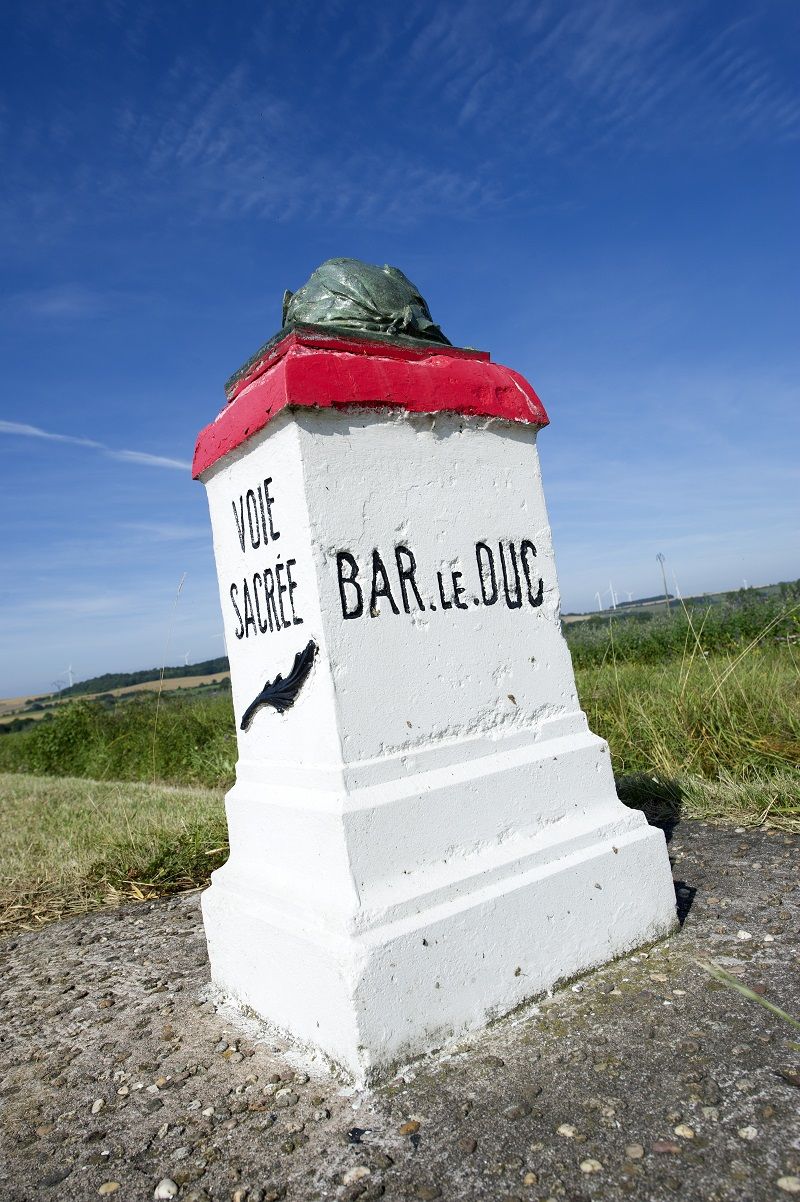
Shortly after the outbreak of the Battle of Verdun on February 21, 1916, the small departmental road leading from Bar-le-Duc to Verdun became a vital lifeline. Maurice Barrès, the nationalist deputy from Lorraine, called it a "sacred road" as early as April 1916, but it is known to posterity as the "Voie Sacrée" (Sacred Way). Reserved for motor vehicles, it ensured, thanks to strict management, the daily transport of 13,000 soldiers, 1,500 tons of ammunition, and 6,400 tons of equipment during the Battle of Verdun, often loaded at Baudonvilliers, south of Bar-le-Duc. After the war, Raymond Poincaré, President of the Republic until 1920 and then President of the General Council of the Meuse, worked with Pol Chevalier, mayor and General Councillor of Bar-le-Duc, to permanently enshrine the memory of those heroic times in the landscape and in people's minds. New kilometer markers were installed along the Voie Sacrée (Sacred Way), officially named the "Route Nationale Voie Sacrée" (National Route Sacred Way) in 1923. These markers are shaped like small pyramids topped with a French soldier's helmet, encircled by a laurel wreath. The first, marker "0," was inaugurated on August 21, 1922, by Raymond Poincaré, then President of the Council. It was located a few hundred meters from this roundabout, towards the town center. It was replaced shortly afterward by the more imposing monument that stands before you, in the center of a wrought-iron railing adorned with war crosses. It was moved here in 2000.