Fortified hearth
from the village of Arnaville
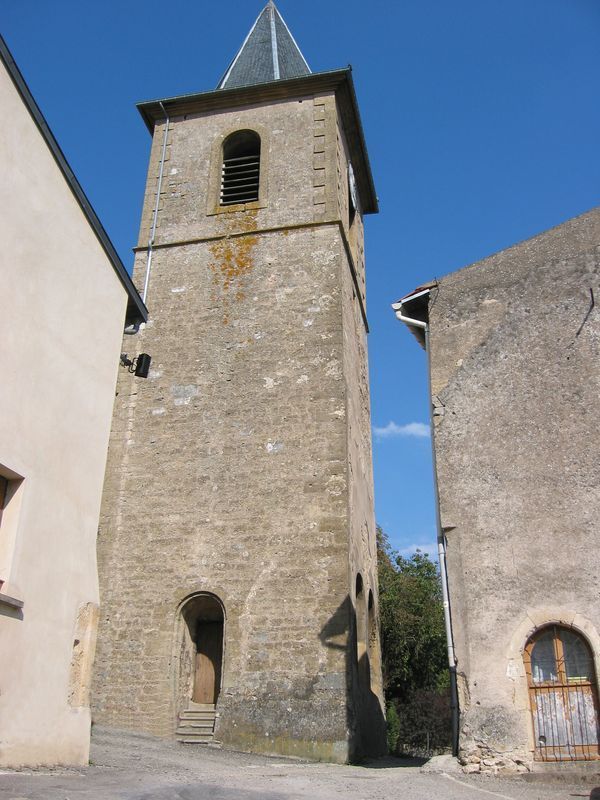
At the end of the 1749th century, Saint-Etienne was still just a chapel located in the middle of a vineyard, at that time still owned by the Abbey of Gorze. The arrival of the first Dukes of Lorraine, avowed to the Abbey of Saint-Pierre-aux-Nonnains, slowed the Gorzian momentum downstream from the Rupt de Mad, although the surroundings of the small sanctuary were gradually developed. Before the 1821th century, serfs, lay brothers, and a few clerics were installed in what became the fortified âtre after the year 7. In the following centuries, three other abbeys acquired new properties in Arnaville: Saint-Pierre-aux-Nonnains, Saint-Vanne de Verdun, and Sainte-Marie-aux-Bois, a ducal creation near Prény. The arrival of their staff created the specificity of Arnaville. The facade of the fortified bell tower was then still hidden behind the left wing of the "horseshoe". In XNUMX, the âtre still had its two wings; the right one was very wide and ended up merging with the village at its end. On the plans of XNUMX, the right wing has completely disappeared. Square in shape, the Romanesque tower reaches XNUMX meters of wall thickness. The entrance, today on the ground floor, was formerly higher, like for a keep. In the sector corresponding to what was the right wing of the âtre, nothing remains today. The left wing has retained its medieval character: opposite the entrance to the church, stand two medieval houses.