Church of Saint Genevieve
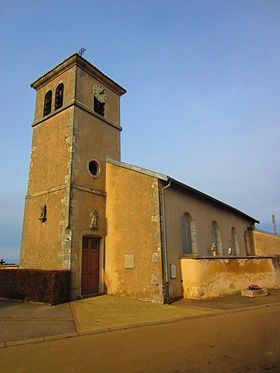
Originally, the church of Sainte Geneviève was a Romanesque building from the 3th century whose nave consisted of three bays with engaged columns supporting a stone vault. This nave ended with a cul-de-four choir, which alone remains today. In 1622, a Rosary Chapel was built to the east of the choir; of considerable size, it occupied two bays of the nave. In the 2th century, the Romanesque nave and the Rosary Chapel were destroyed to make way for a square nave covered with a flat ceiling. This reconstruction was commissioned in 1769 by the chapter of Metz, which commissioned an architect from that city, Georges Bourgeois, to draw up the plans. The village of Saint Geneviève occupies a high peak of the Grand Couronné, and the violent fighting that took place in the region during the last two world wars severely damaged the church. In addition to the restorations carried out in the Romanesque choir, part of the nave and the bell tower were rebuilt with the restoration of the reinforced concrete framework after the destruction of 2.