Saint Leopold Church
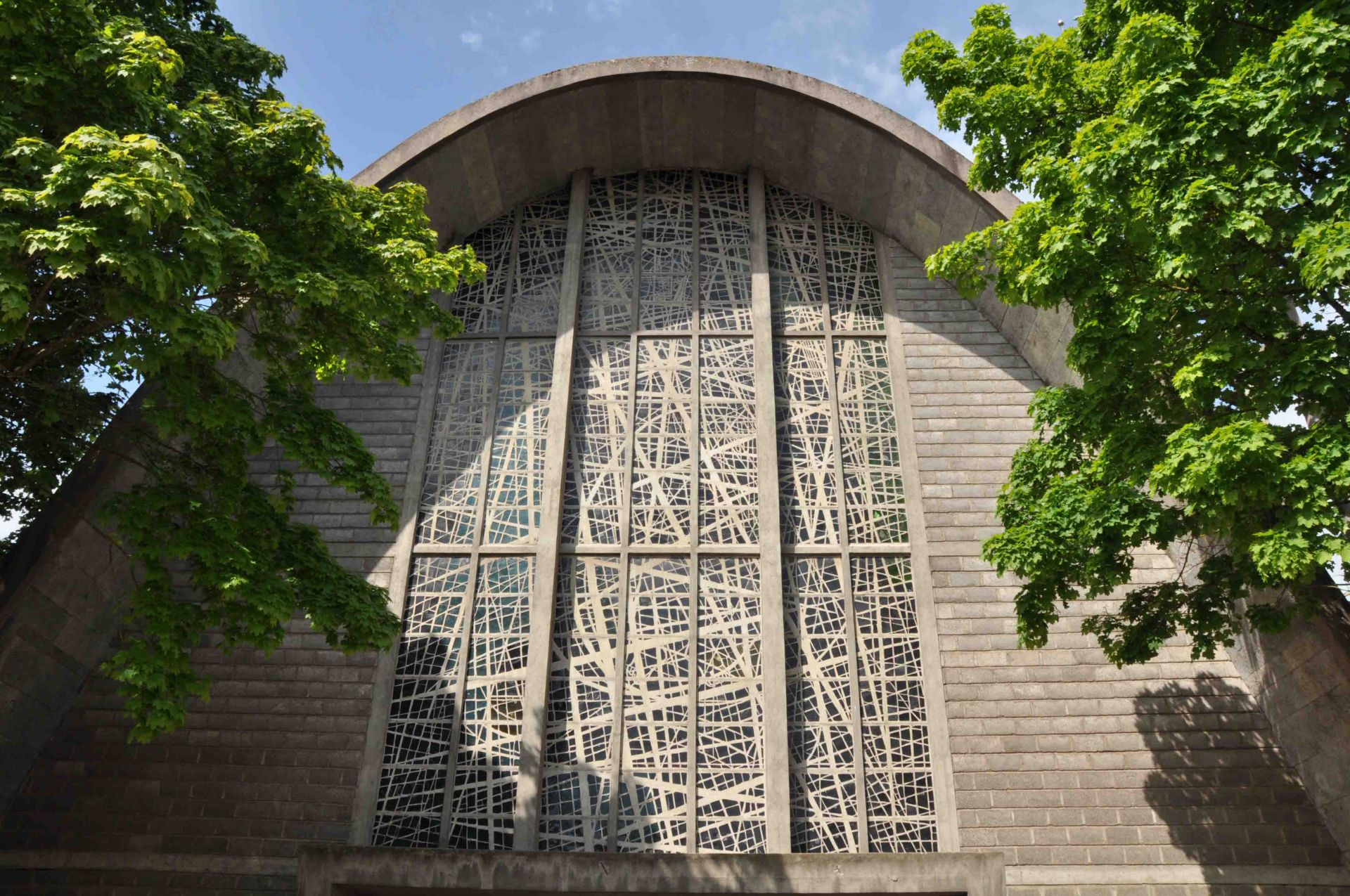
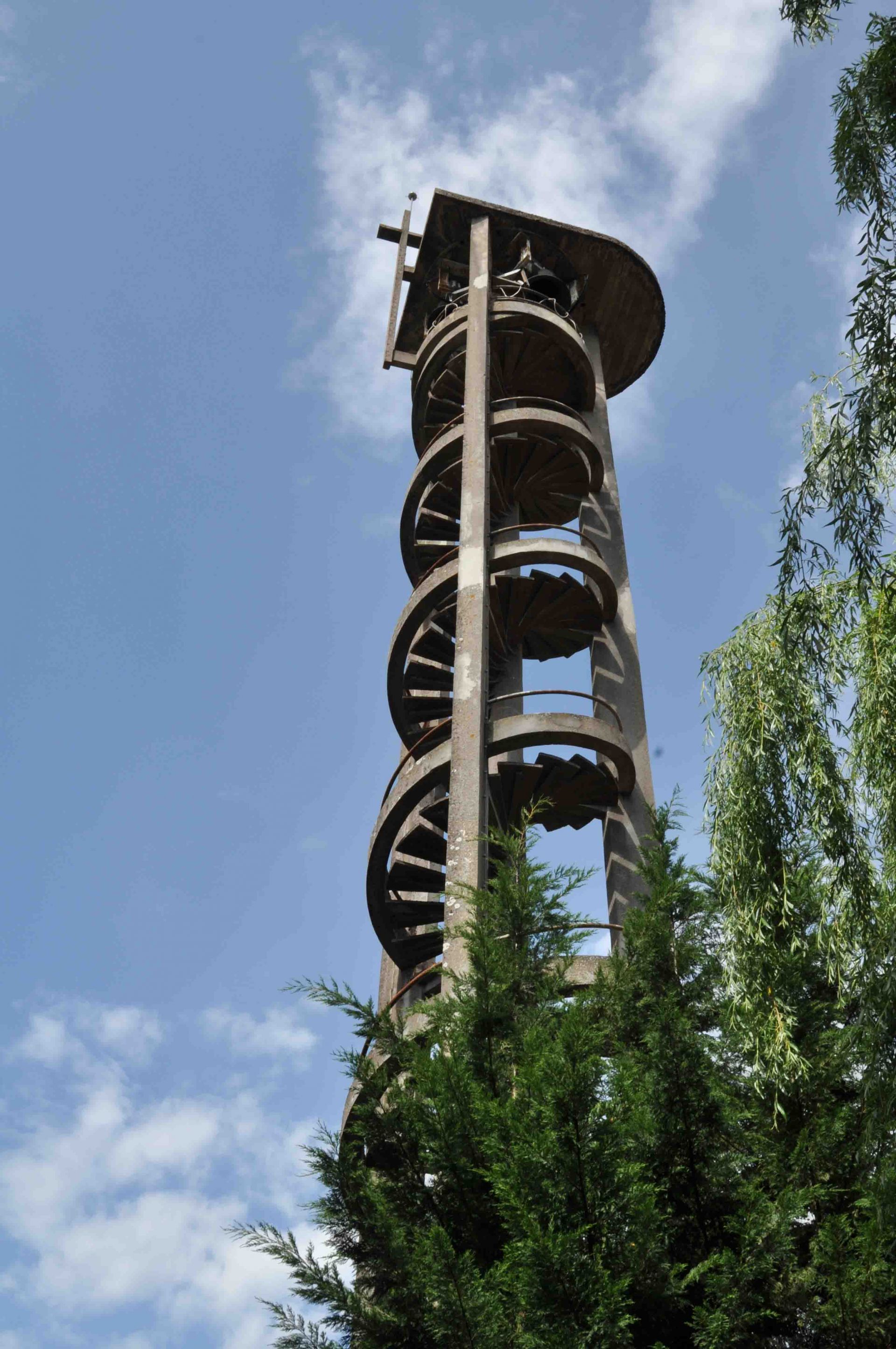
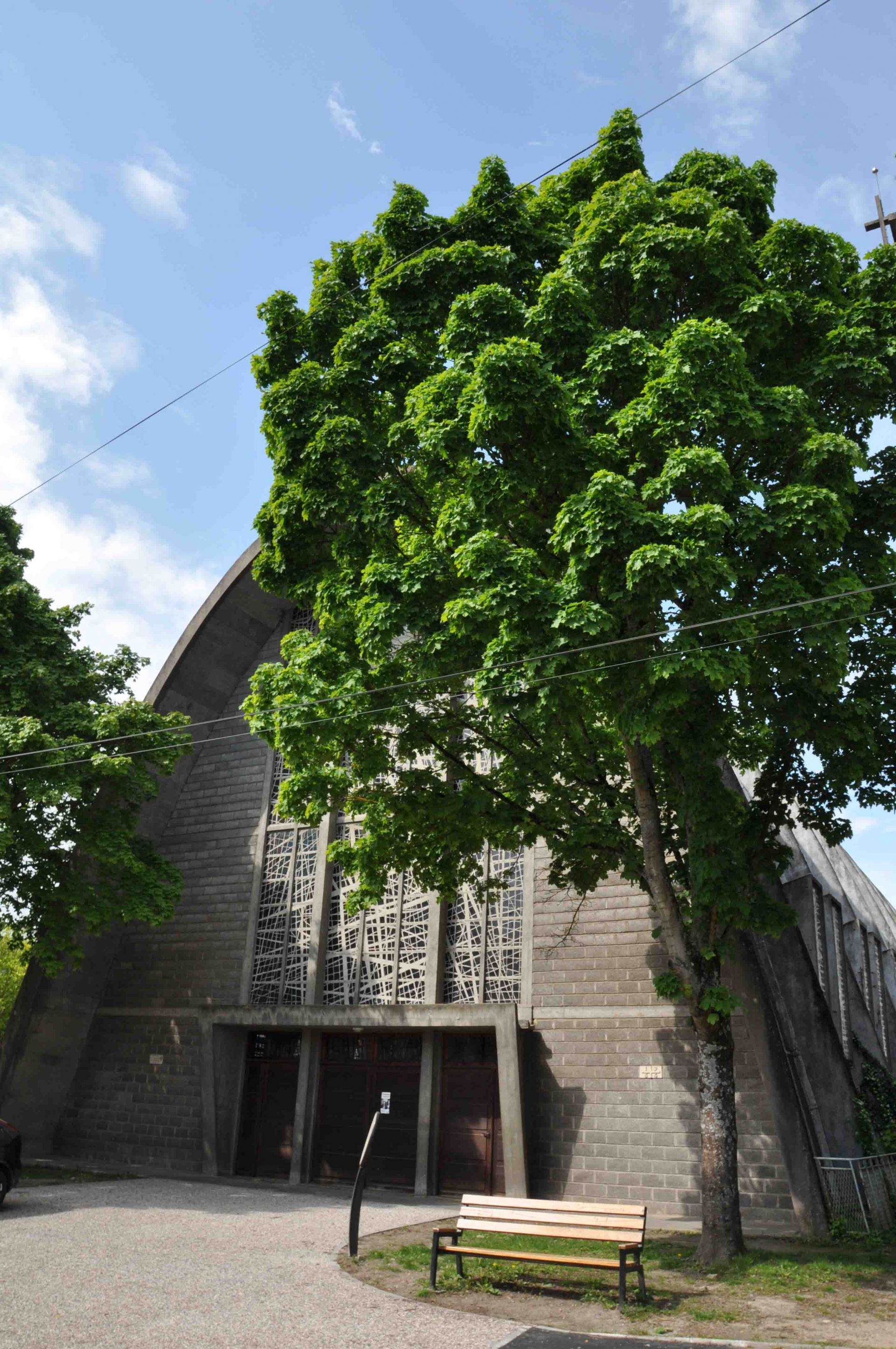
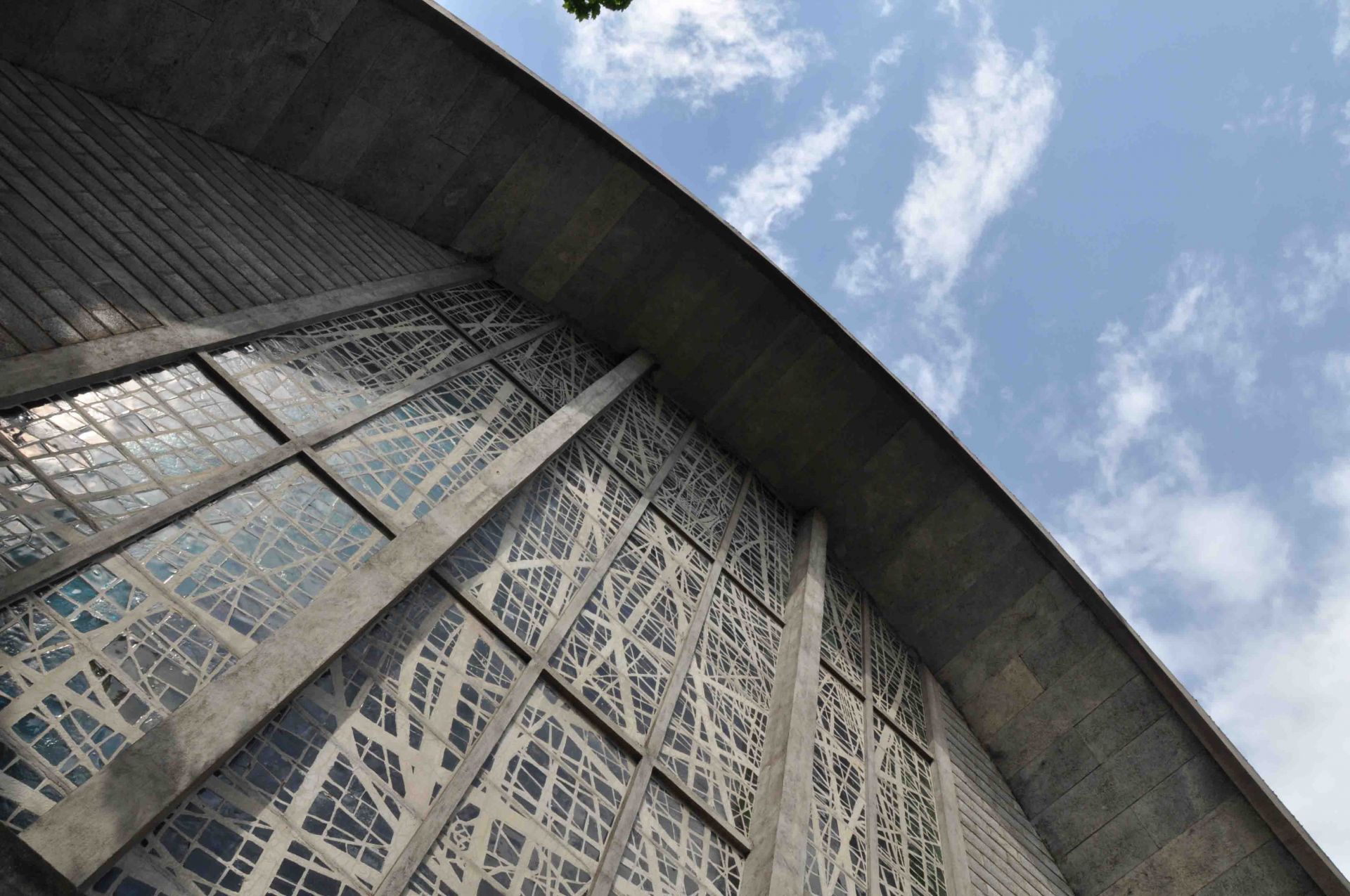
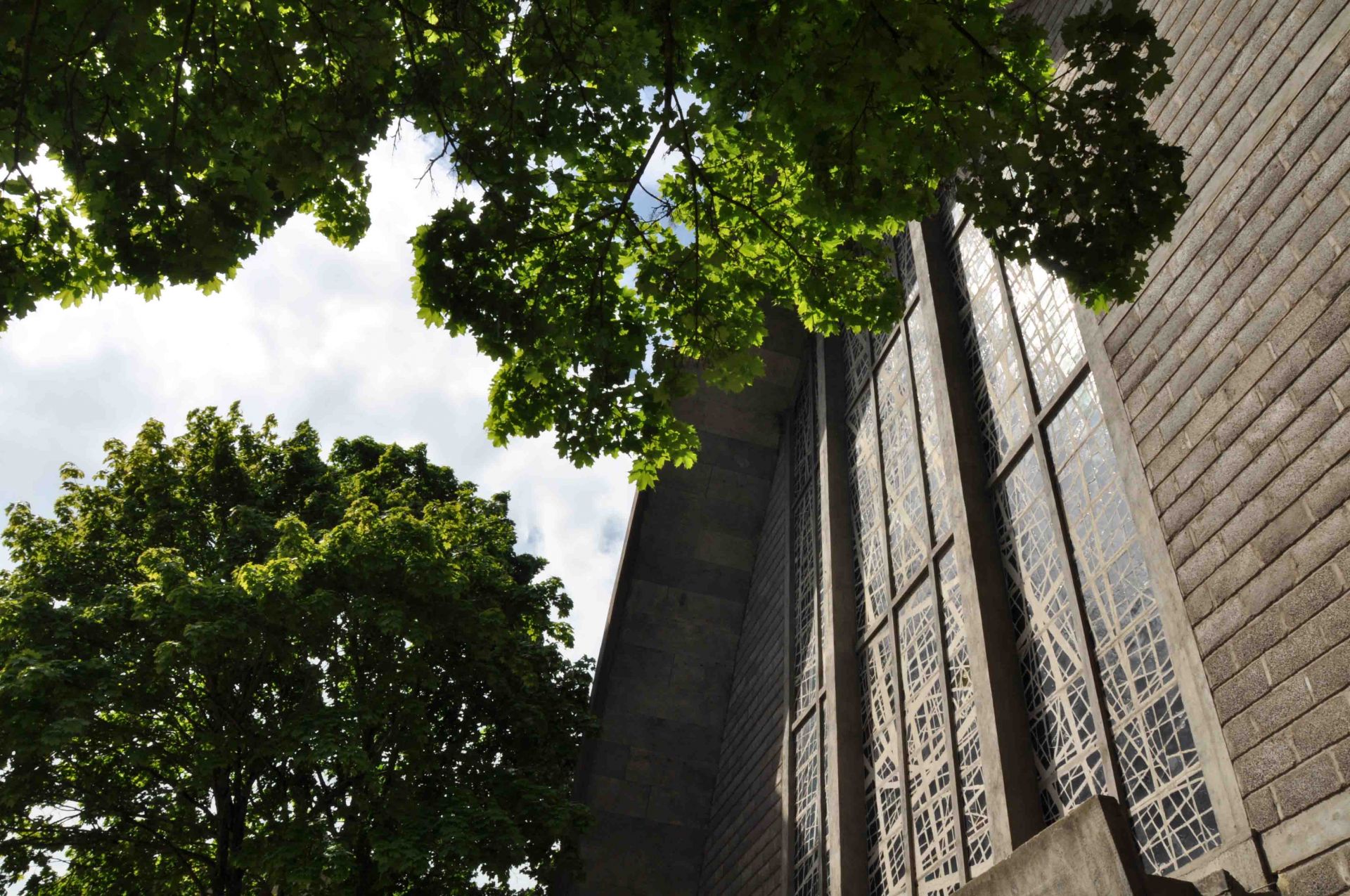
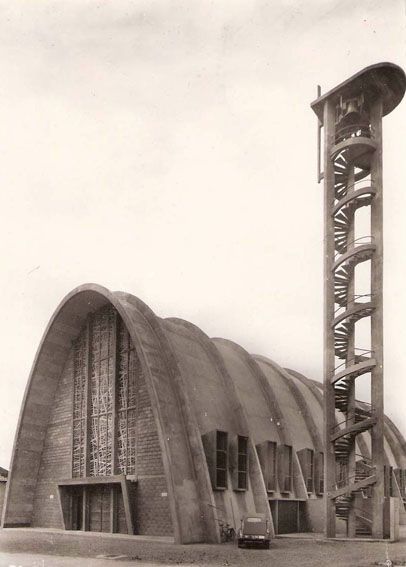
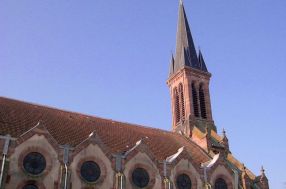
The current Saint-Léopold church was built between 1953 and 1954 under the responsibility of Father Aubry, a great lover of contemporary art. Its bold architecture is characterized by its immense self-supporting concrete vault. This avant-garde construction technique was developed for the hangars at Orly Airport and used for the church of Pampulla in Brazil. The main stained-glass window, created by Jean Barillet from a sketch by Father Aubry, is no less remarkable for its size and originality. The inextricable jumble of lines, which evokes the complexity of the world, reveals the head, hands and feet of a resurrected Christ. The patron saint of the church, which was the first built in this part of the city, was chosen to pay homage to Duke Leopold I, who authorized the foundation of the convent in 1707. During the Revolution, the monks were driven out and the church, which was no longer used for worship, was destroyed in 1825. At the beginning of the 18th century, Place des Carmes was called Place St Léopold in homage to the patron saint of Duke Léopold who, having just recovered his States, carried out a vast urbanization plan in our city. After the demolition of the Carmelite Church (1796), the district remained without a religious building. However, the need for a second parish in Lunéville became apparent. A nun, Sister Boulanger, was the generous instigator of the old St. Leopold Church which was built on the banks of the Vezouze, at the entrance to the Faubourg de Nancy (currently Rue du Général de Gaulle). The construction was completed in less than 6 months and the Church, in approximately Byzantine style, was blessed on December 12, 1878. It was only in 1910 that the Parish of St Leopold was detached from St Jacques. On September 16, 1944, the fleeing Germans blew up the bridge, causing severe damage to St. Leopold's Church. The decision was subsequently taken to knock it down and rebuild a new one a short distance away, on Rue Viox. The project manager for this project was Father Etienne Aubry, parish priest, who designed the plans and directed the work, which was largely carried out by the parishioners themselves. This work brought the parish together and truly made it a "community". The Church was consecrated on December 18, 1954 by Mgr Lallier, Bishop of Nancy. Several noteworthy features can be observed: - The hangar-like architecture without pillars, made of raw concrete (the quintessential reconstruction material after 1945); - The magnificent high altar, whose ceramic depicting the sacrifice of Isaac was executed by the Parisian painter Pierre Ramel, originally from Nancy; - The wooden statues of Christ, the Virgin, St. Joseph, and St. Thérèse, which are the work of Father Aubry; - The enamels of the Stations of the Cross, the Altar of the Blessed Sacrament, the altar of the Virgin, and the Baptistery; - Above the entrance portal, the stained-glass window with its magnificent interplay of colors is by Barillet, who was interested in designing and executing such a large stained-glass window.